
But selectively, with regulatory scrutiny and special approval, points out Tamal Bandyopadhyay.
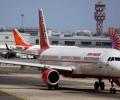
This is a third of Rs 33,992 crore debt that was to be passed on to the new owner during last year's failed divestment process.

'Can a nuclear-armed nation sustain itself indefinitely under overt military rule without catastrophic consequences for itself and the region? History suggests otherwise.'
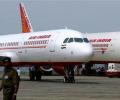
It's too big to digest as one whole airline.'

Air India buyer has to take over interest-bearing debt of Rs 16,500 crore a large portion of which is aircraft related, meaning they are backed by aircraft value

Another reason working in Air India's favour now is the government's plan to clean up part of the airline's burgeoning debt from its books - a major deterrent for investors when it attempted divestment the previous time.

Virtually addressing employees of Air India across the globe, he said for the airline to be the best again there will be an organisational redesign, and it will "require a huge transformation, probably the largest transformation and the change all of you would ever go through". The carrier will expand its "outreach both domestically and internationally" and it has the desire to connect India with every part of the globe, he added.

Salt-to-software conglomerate Tata group was among "multiple" entities who on Monday put in preliminary bids for buying the government's stake in loss-making carrier Air India.

Cairn Energy and Air India have jointly asked a New York federal court to stay further proceedings in the British firm's US lawsuit targeting the airline for enforcement of a $1.2-billion arbitral award. The move follows the government enacting a law to scrap retrospective taxation in the country, which in effect will result in withdrawal of the Rs 10,247 crore tax demand on Cairn, according to court documents reviewed by PTI. The British company had won an international arbitration award against levy of such taxes and sought to take over Air India assets when the government refused to honour the award and pay it $1.2 billion-plus interest and penalty.

Changing tracks helps. But, not taking the beaten path isn't always helpful. This is the story of two of India's biggest privatisations - Air India and Bharat Petroleum (BPCL). Nearly two decades after the last privatisation, a landmark divestment concluded this year when the loss-making national carrier Air India was sold to the Tatas.
The airline had raised Rs 700 crore from the debt market through a non-convertible debenture issue and the same was up for interest payment or redemption on Thursday.

After Operation Sindoor, the Army and Navy now view the IAF as not a supporting arm, but the spearhead of India's warfighting capability, capable of decisive outcomes across domains, explains Air Commodore Nitin Sathe (retd).

Airline told to transfer non-core assets, subsidiaries to special purpose vehicle

The court said if employees continue to hold on to flats then Air India Asset Holding Company would not be able to monetize the land to reduce the burden of Air India's debt.
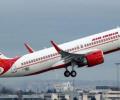
For the AI bid, Interups has joined hands with a few employees of the airline, and plans to raise funds by splitting some of its infrastructure-related assets into an aviation InvIT, which will have underlying assets such as air routes, ground handling, repairs, and training etc.
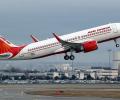
India's largest public sector bank State Bank of India (SBI) will support Tata group's bid for soon-to-be-privatised Air India by subscribing to Tata Sons debentures or funding the special purpose vehicle (SPV) set up by Tata Sons for the acquisition. Bankers said the credit rating of Tata group's holding company is "AAA" signifying high safety and a combination of Air India with its existing airline businesses would make it a formidable player - leading to a duopoly market with IndiGo. It would also open many business opportunities, including in the retail segment, an official said.
Tata Sons has started the process of due diligence of state-owned Air India and its subsidiary Air India Express. Sources said the group has appointed Bain and Company and Seabury Group for this purpose. Once complete, a financial bid will be submitted and a deal to take over the airline is likely to fructify by end of this year or even earlier, people involved in the process said. Simultaneously, the group has brought in veterans in the aviation business from Delta and United Airlines to prepare a plan for post-merger integration of Air India with its existing airline ventures. Tata Sons operates Vistara - a 51:49 percent joint venture with Singapore Airlines and Air Asia India, in which Tatas hold 83.67 per cent stakes.

Tata Group's takeover of loss-making national carrier Air India is most likely delayed by a month till January as the completion of procedures taking longer than expected, an official said on Monday. In October, the government accepted the highest bid made by a Tata Sons company for 100 per cent equity shares of Air India and Air India Express along with its 50 per cent stake in ground-handling company AISATS -- the first privatisation in 20 years. At that time, the government had stated that it wanted to complete the transactions, which included Tatas paying Rs 2,700 crore in cash, by December end.
Amid continuing uncertainty over the fate of the national carrier, an official said there is also need for funds to restart operations of 12 grounded narrow-body planes.

'Since the government will not hold any significant stake in the airline this time, such restrictions are not required anymore.'
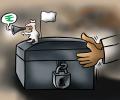
The government is selling its entire 100 per cent stake in Air India but wants effective control to stay with Indian nationals.
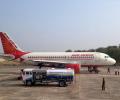
"The strategic divestment transaction of Air India successfully concluded today with transfer of 100 per cent shares of Air India to M/s Talace Pvt Ltd along with management control," DIPAM secretary Tuhin Kanta Pandey said in a tweet. A new board, led by the strategic partner, takes charge of Air India, he added.

'If the Trump administration could gain access to the nuclear weapons, they would be satisfied -- at least they could control them.'

Tech tycoon Azim Premji's global investment arm, Manipal Group Chief Ranjan Pai's family office and 360 ONE Asset have sought approval from fair trade regulator CCI to acquire stakes in domestic carrier Akasa Air's parent company SNV Aviation. "The proposed transaction involves the acquisition of certain shareholding by each of PIOF, Claypond and 360 Fund (through its various schemes and affiliates) in Akasa Air," said a notice filed with the Competition Commission of India (CCI) on Wednesday.

The best course for the government at this time would be to tighten the seat belt a little more, without compromising on its investments in creating better infrastructure and giving a push to privatisation, points out A K Bhattacharya.

Tata Group-owned Air India has informed the Centre that aircraft lessors wish to set up their special purpose vehicles (SPVs) outside India since they aren't enthused about the Indian 'legal structure' and are loath to take risks. Indian airlines have a combined fleet of about 700 planes; over 85 per cent are on lease. A majority of lessors are based in Ireland due to its attractive tax policy, light-touch regulations, and swift legal system.

The MiG-21's sharp silhouette and supersonic roar will live on in the memories of those who flew it, those who maintained it, and those who watched it streak across the sky as a symbol of India's strength, asserts IAF veteran Air Commodore Nitin Sathe (retd).

The foremost lesson for India today is to beef up its air defence to cater for multiple drone attacks. As seen in Operation Sindoor, we have come a long way, but there's room for getting better. We must develop a robust and almost impregnable air cover over ourselves, asserts IAF veteran Air Commodore Nitin Sathe (retd).

Last fortnight, State Bank of India Chairman C S Setty lifted the veil on a subject long spoken of in corporate corridors: Why can't our banks finance mergers and acquisitions (M&As)? Change is in the air: Indian Banks' Association (of which Setty is the chairman) is to "make a formal request" to Mint Road to make way for it. Thus far the exclusive turf of foreign banks even though its funding remains offshore - as in, it's not on these entities rupee-book (and a few select shadow banks) - a most lucrative segment in the investment banking suite, M&As, will be homeward-bound.
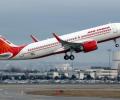
It is Air India's only profitable subsidiary. In 2016-17, it clocked a profit of over Rs 33.4 crore, earning Rs 620 crore in revenues from its handling operations.

'National assets, created over the years through tax-payers's money, should not be handed over to business houses at throwaway prices.'
'Pakistan is no longer a front-burner issue for America.'

'This strike has certainly enhanced your image.' 'Otherwise, people would have called you a damp squib, capable of doing nothing except talking big.'
British Airways, Lufthansa, Etihad and Singapore Airlines are scouting for an Indian partner that meets the net worth criterion

Seasoned bureaucrat and a stickler for rules Finance Secretary Tuhin Kanta Pandey will be at the helm of capital market regulator, Securities and Exchange Board of India (SEBI), for three years. The 1987-batch Odisha-cadre Indian Administrative Service (IAS) officer, Pandey, would replace Madhabi Puri Buch, whose three-year term ends on Friday.

The Indian government has appointed Finance Secretary Tuhin Kanta Pandey as the new chairman of the Securities and Exchange Board of India (SEBI). Pandey, a 1987-batch IAS officer, will replace Madhabi Puri Buch, whose three-year tenure ends on February 28. Pandey's appointment comes at a time when the markets are experiencing bear pressure due to withdrawals by foreign institutional investors (FIIs). Pandey has extensive experience in the finance ministry, having served as the longest-serving secretary in the Department of Investment and Public Asset Management (DIPAM) and the Department of Public Enterprises (DPE). He also played a key role in the framing of the 2025-26 Budget and the drafting of the new Income Tax Bill. Pandey's appointment is for an initial period of three years.
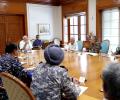
'One good outcome of Operation Sindoor -- perhaps, its best outcome -- could be that India has resumed meaningful contact directly with Pakistan at the military-to-military level,' observes Ambassador M K Bhadrakumar.

The Union government has no 'Buy India' policy, but has a 'Buy Air India' policy.
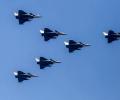
The exercise is taking place at a time when tensions between India and Pakistan have gone up after the Pahalgam attack.
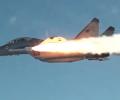
'For weeks, months and years, it would continue to be debated if India should have pushed the early advantage and decapacitated Pakistan militarily.' 'India refused to bite the provocatively proverbial bullet and escalate it into a full-fledged war,' notes N Sathiya Moorthy.
 © 2026 Rediff.com - Advertise with us - Disclaimer - Privacy Policy - Sitemap - Feedback - About us - Terms of use - Grievances